

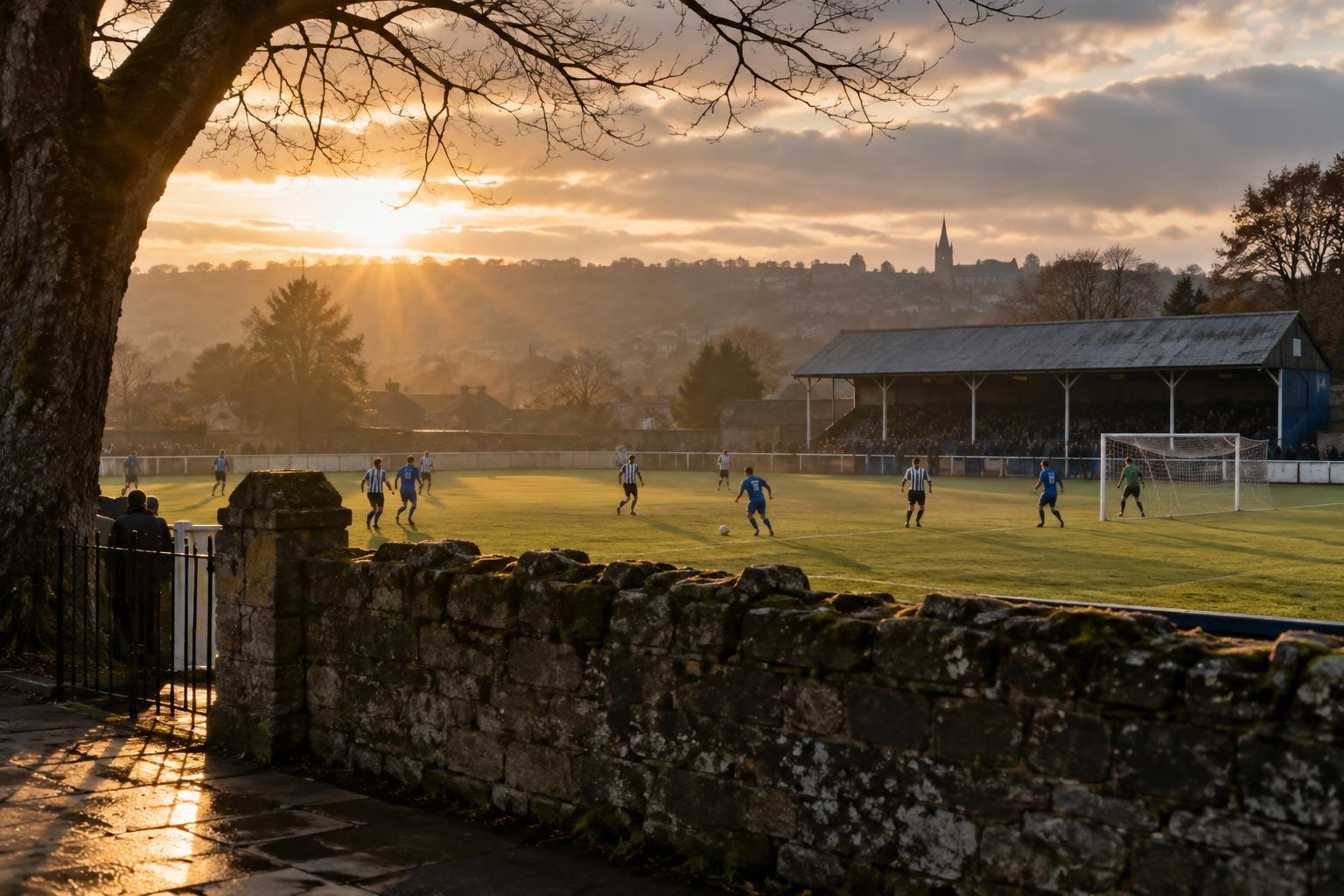
Sandygate is England’s oldest football ground. Discover its history, why Bramall Lane also claims a record, and what the different dates mean.
The oldest football stadium in England is Sandygate in Sheffield, home of Hallam FC and recognised by Guinness World Records as the world’s oldest football ground. It opened in 1804, although Hallam have played football there only since 1860: those dates describe different parts of its history. If you mean the oldest stadium still hosting professional football, the usual answer is Bramall Lane, also in Sheffield. The distinction matters, because lists of historic grounds often mix up when a sporting venue opened, when football arrived and when its present club moved in.
Sandygate: England’s oldest football ground
 Advertisement · 18+ · Gamble responsibly · BeGambleAware.org
Sandygate sits in Crosspool, a suburb of Sheffield, and is home to both Hallam FC and Hallam Cricket Club. Its story is a reminder that football did not always arrive at a ready-made stadium with turnstiles, towering stands and a club shop. An established sporting ground could become a football venue later, which is precisely why the 1804 opening date needs explaining. It is the age of the ground, not evidence that Hallam were playing football there at the beginning of the nineteenth century. Their football connection begins in 1860.
The landmark occasion came on 26 December 1860, when Hallam faced Sheffield FC at Sandygate in what is recognised as the world’s first inter-club football match. That gives the place a significance beyond simply being an old patch of sporting land. It connects the ground to the emergence of football as a game played between clubs, rather than merely to the construction date of a venue. For anyone who loves the ritual of a Boxing Day fixture, there is something especially pleasing about that date: this particular festive meeting belongs right near the beginning of the story.
Sandygate’s appeal is its modest scale as much as its record. Spectators can watch from three sides: the Shed End, the Main Stand and the Cricket Net End. The Shed End is a covered terrace behind the goal on Sandygate Road, associated with the vocal home support. You do not need a vast bowl of seats for a ground to matter. Here, the football and cricket identities sit together, and the setting offers a different way to appreciate football heritage: not as a museum exhibit, but as a place where people still gather to watch their club.
Why Bramall Lane also has an oldest-stadium claim
Bramall Lane opened in 1855 as a cricket ground, hosted football from 1862 and became Sheffield United’s home in 1889. It is widely described as the oldest stadium in the world still staging professional football. That does not displace Sandygate’s broader recognition; it answers a narrower question. The crucial word is ‘professional’. When somebody names Bramall Lane as England’s oldest football stadium, they may be using that qualification without saying it aloud. Sheffield therefore supplies both the general answer and the professional-football answer, making the city central to any discussion of the game’s oldest surviving venues.
The dates also explain why ranking grounds is less straightforward than sorting a spreadsheet. Bramall Lane opened before Field Mill in Mansfield, whose first recorded football match dates to 1861, yet Field Mill’s recorded football use predates Bramall Lane’s. Mansfield Town did not make Field Mill their home until 1919. Each date is useful, but each measures something different. Nor should ‘oldest stadium’ be read as ‘oldest surviving stand’: a ground can retain its identity while its structures are rebuilt. The historical claim concerns the venue, not a promise that every seat, roof or terrace survives from its earliest days.
Deepdale, Preston North End’s home, is another name that appears in discussions of the oldest active stadiums; the supplied histories date it to 1878. Such competing claims need their precise criteria attached before they can be compared sensibly. Other familiar grounds illustrate the same dating problem. Stamford Bridge opened in 1877, while Chelsea arrived in 1905. Anfield opened in 1884, initially housed Everton and became Liverpool’s home in 1892. Those are not contradictory dates. They are separate milestones, and treating a club’s arrival as the ground’s opening can wipe a substantial chapter from its history.
Comparing and visiting England’s historic football grounds
Geography is another easy trap. A list of the oldest grounds in the UK is not the same thing as a list for England. Wrexham’s Racecourse Ground, for example, is in Wales, so it cannot answer this particular query, however important its history. Equally, a stadium list limited to large venues or clubs in the top professional divisions is not a complete survey of English football grounds. Smaller places can disappear from those comparisons simply because of the selection rules. Sandygate is a good reason to look beyond the best-known league grounds when exploring football’s beginnings.
If you want to experience the history rather than just settle a quiz argument, start by checking Hallam’s official fixture and visitor information before planning a trip to Sandygate. Confirm admission arrangements and any match changes rather than assuming access or tours are available. Bramall Lane offers a separate strand of the story through Sheffield United’s professional home. The useful answer to remember is simple: Sandygate is England’s oldest recognised football ground, opened in 1804 with football played there since 1860; Bramall Lane is the answer when the question specifies a stadium still hosting professional football.
More columns

Arsenal need perspective after Fleetwood, but not an excuse
Touchline Opinion
29 October 2026

How Many Games Are There in a Premier League Season?
Touchline Guides
28 October 2026

When did Arsenal last win the Premier League?
Touchline Guides
28 October 2026

When Did Leicester Win the Premier League?
Touchline Guides
28 October 2026
