
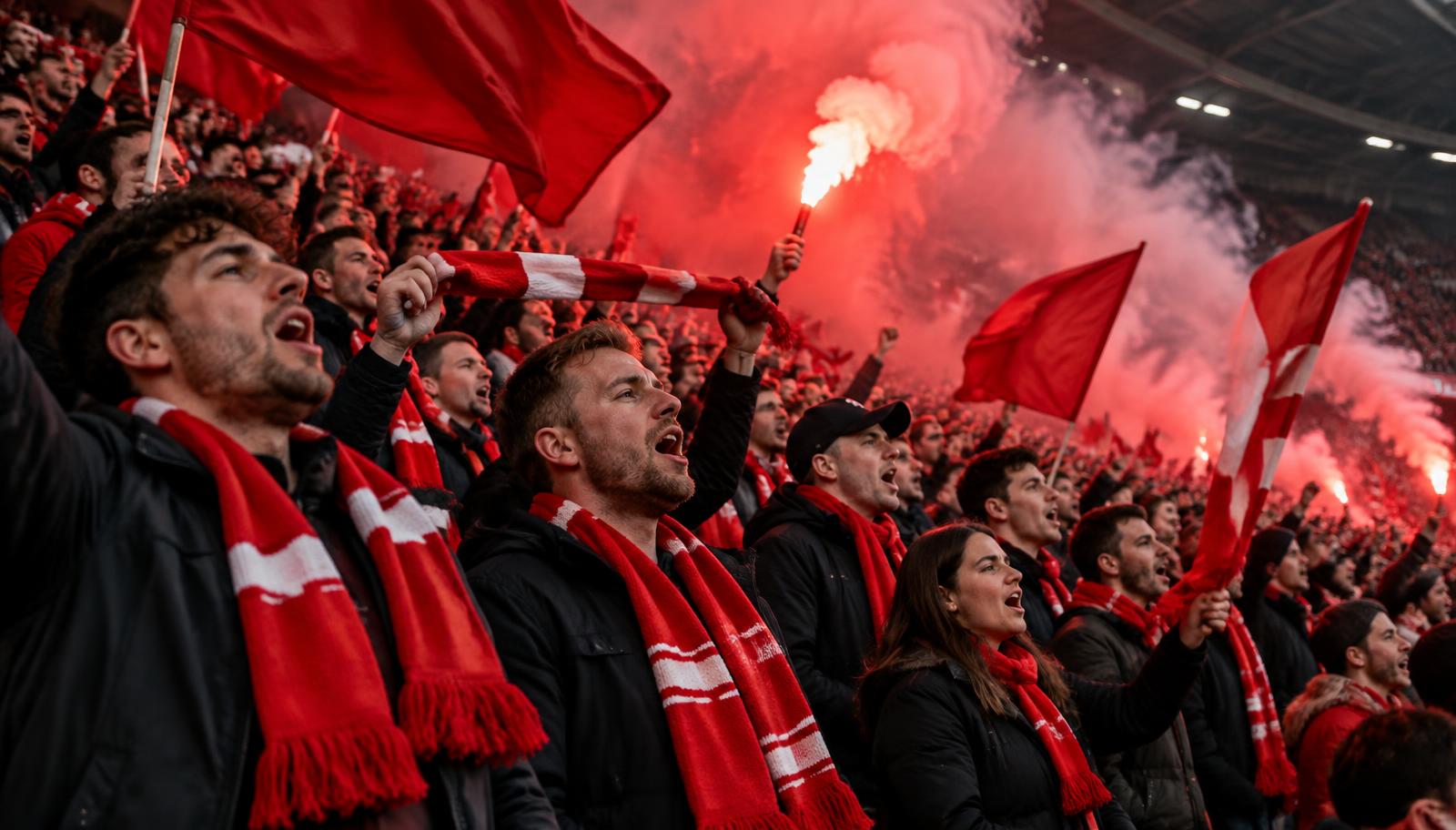

The EFL Championship explained: where it sits in English football, how the season works, and how clubs win promotion or suffer relegation.
The EFL Championship is the second tier of English football, directly below the Premier League and above League One. Run by the English Football League, the EFL, it features 24 professional clubs competing for promotion to the top flight while trying to avoid relegation. It is the EFL’s highest division, but not the highest division in English football overall: that distinction belongs to the Premier League. Think of it as the Premier League’s fiercely contested front door, with another trapdoor beneath it.
How does the EFL Championship season work?
 Advertisement · 18+ · Gamble responsibly · BeGambleAware.org
Each club plays every other club twice, once at home and once away, making 46 league matches per team. The regular season usually runs from August to early May, with the play-offs following afterwards. A win earns three points, and the league table determines what happens next. When teams finish level on points, the first separating factors are goal difference and then goals scored. That means a late consolation goal can matter beyond making a defeat look slightly less painful: in a tight race, the margins really can come down to one goal.
The schedule is part of the Championship’s character. Its 46-match league campaign is eight games longer than the Premier League’s, with midweek fixtures squeezed between weekends and particularly busy spells around Christmas and Easter. Clubs also compete in the FA Cup and EFL Cup, separate knockout competitions rather than parts of the Championship table. Following a team therefore means keeping an eye on more than its strongest starting line-up. Squad depth, recovery and the ability to respond to a disappointing result all become important when the next match is already looming.
Championship promotion, play-offs and relegation
Three clubs go up to the Premier League each season. The teams finishing first and second are promoted automatically, with the first-placed side also crowned Championship champions. The remaining promotion place goes to the play-off winners. This is an important distinction for newcomers: finishing third does not guarantee promotion, and winning the play-offs does not make a club the league champions. Automatic promotion rewards a season’s consistency directly; the play-offs give other high-finishing clubs a further chance, with all the tension that comes from turning months of work into knockout football.
The play-off qualification rules need a little care because the format is changing. Through the 2025–26 season, the clubs finishing third to sixth entered a four-team competition. At the time of writing, the published change for 2026–27 expands that field to the clubs finishing third to eighth. If you are following a particular season, check the EFL’s current competition information rather than assuming an older explainer still applies. The central principle remains straightforward: the play-offs award one promotion place, with a single-match final at Wembley deciding who takes it.
At the other end, the bottom three clubs are relegated directly to League One: there is no relegation play-off to offer a final escape. They are replaced by three promoted League One clubs, while movement between the Championship and Premier League changes the division’s membership too. This is why the Championship is a level of competition, not a permanent collection of teams. A familiar club name might belong to a promotion contender, a side rebuilding after relegation or a team simply trying to stay in the division. Reputation does not reserve anyone a place.
Why is it called the Championship?
The name is newer than the competition. England’s second tier began in 1892 as the Football League Second Division. When the Premier League broke away in 1992, the second tier became the Football League First Division: first within the remaining Football League, but still second in the overall pyramid. It was renamed the Football League Championship in 2004, with the EFL Championship name following in 2016. Those changes explain why older supporters and historical accounts use different division names. They are describing different eras of the same second-tier lineage, not entirely unrelated competitions.
There is a lovely historical twist to the silverware, too: the Championship winners receive the trophy previously awarded to English top-flight champions before the Premier League began. Despite its grand name, however, the Championship is not the competition that decides today’s champions of England. Nor is it the same thing as the EFL Cup. Welsh clubs can also compete in this English league structure; the word “English” describes the league system rather than restricting every participating club to England. Keeping those distinctions in mind makes the naming much less confusing.
What makes the division worth watching is the combination of opportunity and jeopardy. Promotion brings access to much greater Premier League revenues, which helps explain the enormous stakes attached to the play-off final; relegation brings a difficult adjustment in the opposite direction. But you do not need a financial spreadsheet to enjoy it. Start with the table: follow the automatic-promotion race, the chase for play-off places and the struggle above the bottom three. Those overlapping battles are the Championship in miniature, a long season with several different kinds of happy ending, and plenty of ways to have your nerves tested.
More columns

Arsenal need perspective after Fleetwood, but not an excuse
Touchline Opinion
29 October 2026
How Many Games Are There in a Premier League Season?
Touchline Guides
28 October 2026
When did Arsenal last win the Premier League?
Touchline Guides
28 October 2026

When Did Leicester Win the Premier League?
Touchline Guides
28 October 2026
